How to Create AWS Organization for Consolidated Billing
Table of Contents
- Introduction
- Setting Up AWS Organizations
- Inviting Child Accounts
- Accepting Invitations
- Organizing Accounts
- Conclusion
Introduction
If you just have one AWS account, you can use that account for billing and development. However, if you have multiple AWS accounts, it is hard to manage each account's billing. AWS provides a way to consolidate billing using AWS Organizations.
Assume that you have the following different AWS accounts:
- AWS Account - Use for Development
- AWS Account - Use for QA
- AWS Account - Use for Production
For consolidated billing, we'll set up AWS Organizations as follows:
- AWS Account - Use as Root Account, and billing only
- AWS Account - Use for Development
- AWS Account - Use for QA
- AWS Account - Use for Production
Setting Up AWS Organizations
Go to the root account (or create a new AWS account to use as the root account for billing). Then go to Services and click AWS Organizations, then click Create Organization.

Click Create organization.

Now the AWS Organization has been created, and you should receive an email for confirmation.

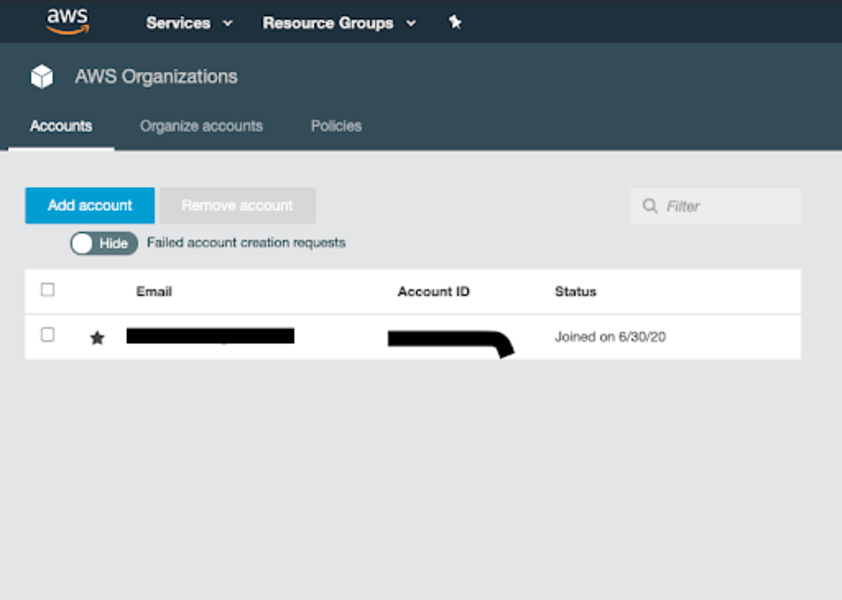
After confirming the account, it should appear as follows:
Inviting Child Accounts
Now we will send an invite to all other accounts from the root account.

After each account receives an invitation email, you should see a list of accounts on the following page:

Accepting Invitations
On each child account, accept the invitation.

Confirm that you'll join the organization.


After each account accepts the invitation, this is how the root account's organization view looks:

Organizing Accounts
You can also organize accounts by renaming or moving them. For instance, you can create dev and marketing folders for each team and assign accounts to each folder.

Conclusion
AWS Organizations provides a convenient way to consolidate billing across multiple AWS accounts. By setting up a root account and inviting child accounts, you can manage billing centrally and organize accounts by team or environment.